
Children's Day: How Families Can Protect a Child's Health
Children's Day in India is on 14 November. A practical guide to nutrition, immunisation, growth checks, sleep and when a child needs medical care.
- Written by
- MyMedicare Editorial Team
- Published
- Reading time
- 4 min read
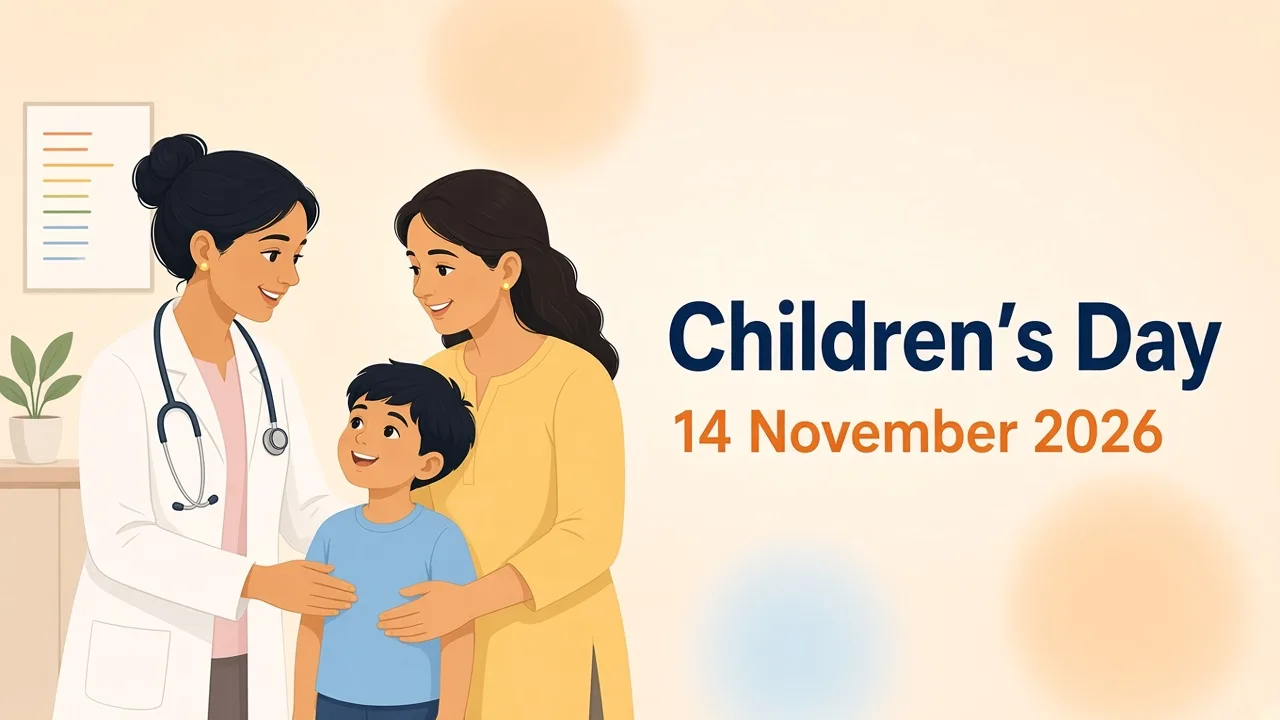
Children's Day in India is observed on 14 November, the birthday of Pandit Jawaharlal Nehru. It is a day for schools, families and communities to celebrate children. It is also a useful moment to look at the care that helps a child grow: regular meals, vaccines, sleep, play, and a health visit when something does not seem right. Celebration and health care belong together.
This date is not the same as World Children's Day. The United Nations observes World Children's Day on 20 November. In India, Children's Day, often called Bal Diwas, is 14 November.
Meals that support growth
Children need regular meals with enough energy, protein and micronutrients for growth and learning. A practical plate can include vegetables, fruit, pulses such as dal, whole grains such as rice or roti, and a protein food that fits the family's diet, such as egg, fish, paneer, curd or another familiar option. Milk can be one source of protein and calcium for children who tolerate it. It is not the only source, and it should not replace breast milk or infant formula as the main drink in the first year.
Offer a variety of foods more than once. Appetite changes from day to day, and pressure or shame around eating usually makes meals harder. Limit sugary drinks and keep water available. If a child is not growing as expected, refuses most foods for a long period, or has trouble chewing or swallowing, ask a paediatrician or dietitian rather than starting supplements on your own.
Vaccines and the child health record
Vaccines protect children from serious infections. Follow India's national immunisation schedule and keep the child's vaccination card or Mother and Child Protection card with other health papers. If a dose was missed, ask a government health centre or paediatrician about a catch-up plan. Do not restart the schedule from guesswork.
Routine visits are also the time to check weight, height, development, vision, hearing, teeth and nutrition. Bring questions about sleep, school, mood and any medicine the child takes. A vaccine question is reasonable. Ask what the dose prevents, what mild effects to expect, and which symptoms need a call back.
Play, sleep and school days
Sleep supports growth, mood and attention. A regular bedtime and a quiet room help more than a late screen. Active play, including time outdoors when it is safe, supports fitness and coordination. Use sun protection and road safety that match the child's age.
Keep screens away from meals and the hour before bed when you can. Choose content that fits the child's age, and balance screen time with talk, reading and play. Schools can support health with safe drinking water, a place to wash hands, and a way to tell a parent if a child seems unwell. Tell the school about allergies, long-term conditions and emergency contacts, and share only what the school needs.
When to get medical help
Seek urgent care for difficult breathing, a seizure, severe dehydration, unusual drowsiness, a serious injury, or any other sign that the child is much more unwell than usual. For a young infant, poor feeding or fever needs prompt advice. Trust a parent's concern. A milestone checklist is a conversation aid, not a diagnosis. Children develop at different rates, but loss of skills the child already had, not responding to sound, or a worry that keeps returning should be assessed.
A practical action plan
- Find the immunisation card and note any dose that may have been missed.
- Write down questions about appetite, sleep, school and mood before the next visit.
- Keep prescriptions, allergy details and important reports together so any clinic can see them.
- Agree who to call, and which hospital to use, if a child becomes seriously unwell.
Common questions
- When is Children's Day in India? Children's Day, or Bal Diwas, is observed on 14 November, the birthday of Jawaharlal Nehru.
- Is this the same as World Children's Day? No. The United Nations observes World Children's Day on 20 November.
- What if a vaccine dose was missed? Contact a health centre or paediatrician for a catch-up plan. Do not guess the dates.
- Does every child need the same checkup? The schedule depends on age and health. Follow recommended visits, and go sooner if you are worried.
- When is a sick child an emergency? Breathing difficulty, a seizure, severe dehydration, unusual unresponsiveness or a serious injury needs urgent care.
Keep your child's vaccination card, prescriptions and reports together in MyMedicare.
Create a free account